AIAI Operations LabAI Product & Business AnalystContact

AI product system

Ghost AI: collaborative architecture and workflow orchestration.

An AI-native product, analytics, and systems orchestration platform for designing architecture, generating specs, coordinating realtime collaboration, and running background AI workflows.

Collaborative AI Architecture Workspace

Production-grade AI systems workspace under active development.

Under Active Development

Ghost AI is presented as a modern build-in-public product system: realtime collaboration, AI-assisted systems design, interactive canvas orchestration, background workflow execution, and production deployment through Vercel.
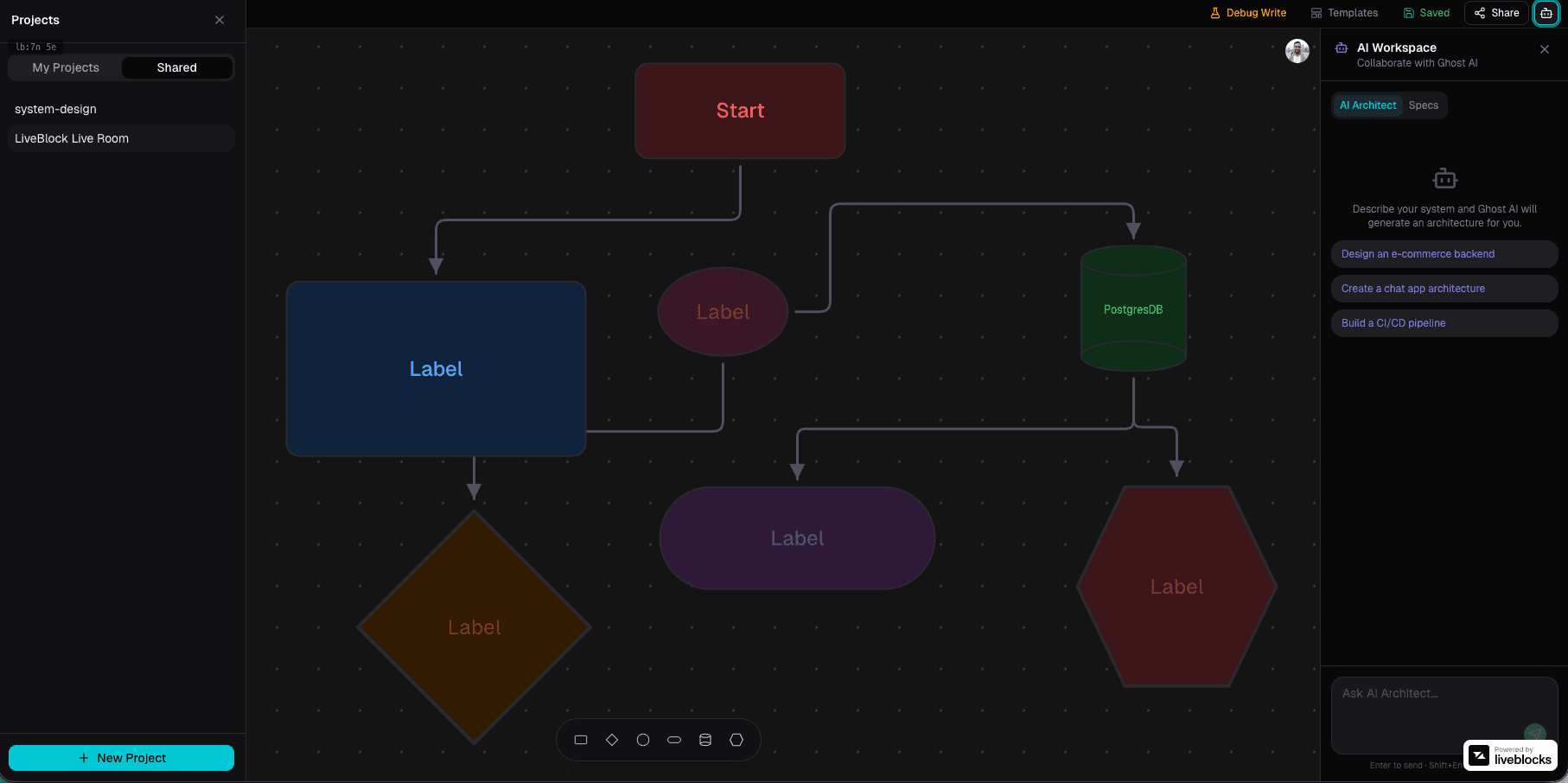
Ghost AI architecture workspace with collaborative projects, React Flow canvas, and AI Architect assistant panel

Current Ghost AI workspace: shared project rooms, architecture canvas, component palette, saved state, Liveblocks collaboration, and an AI Architect panel for system design prompts.

Tech stack

A full-stack AI product surface with collaboration, data, and orchestration.

The project reads well for technical recruiters because it shows modern product engineering, AI integration, realtime state, durable data, and deployment operations.

Next.js + TypeScript
Liveblocks realtime collaboration
Trigger.dev background AI workflows
Prisma + PostgreSQL integration
OpenRouter LLM integration
React Flow architecture canvas
Vercel deployment + CI/CD
Environment management and production debugging

AI Architect workspace

Architecture turns product intent into a shared engineering map.

Ghost AI is designed to help teams describe a system, generate or refine architecture, review dependencies, and keep implementation context visible across product and engineering.

Shared architecture canvas

Teams can map services, databases, APIs, workflows, and dependencies in one visual workspace instead of scattering system decisions across chats and docs.

AI-assisted system planning

The AI Architect panel helps turn product intent into architecture options, suggested components, implementation notes, and reviewable system flows.

Engineering alignment

Engineers get a clearer view of ownership, integration points, data movement, deployment assumptions, and risks before implementation begins.

Product-to-build bridge

Product and business stakeholders can see how requirements become technical structure, making handoffs, scope discussions, and tradeoff reviews easier.

Architecture and workflow

Designed as an operating system for AI product and systems work.

Ghost AI connects architecture mapping, realtime collaboration, background AI workflows, database-backed state, and production delivery.

Architecture canvas

React Flow workspace for mapping systems, data movement, AI services, product flows, and orchestration logic.

Realtime collaboration

Liveblocks-powered presence, shared activity, and collaborative feeds keep system design work visible to the team.

AI orchestration

Trigger.dev supports long-running background AI workflows for product/spec generation and multi-step system tasks.

Persistent system memory

Prisma and PostgreSQL give the workspace durable project context, schema-backed state, and production-ready data foundations.

System evidence

The project story is framed around architecture, workflow, and recruiter-readable outcomes.

This keeps the portfolio premium and technical without turning the page into a code dump.

Ghost AI system notes

1Ghost AI is positioned as an AI-native product, analytics, and systems orchestration platform.23- Frontend: Next.js, TypeScript, and a React Flow architecture canvas4- Collaboration: Liveblocks presence, feeds, and realtime shared workspace patterns5- AI layer: OpenRouter LLM integration for assisted systems design and product/spec generation6- Workflow layer: Trigger.dev background jobs for long-running AI orchestration7- Data layer: Prisma with PostgreSQL for persisted workspace and system context8- Delivery layer: Vercel deployment, environment management, and production debugging

Challenges solved

The strongest signal: product thinking plus AI systems execution.

Ghost AI adds a future-facing product build to the portfolio while staying grounded in architecture, collaboration, and production engineering.

Turning AI ideas into architecture

Frames AI-assisted systems design as a structured workspace where product intent, data flows, and technical components stay connected.

Making collaboration realtime

Uses shared presence and feeds so product, analytics, and engineering contributors can work from the same operating surface.

Handling long-running AI work

Moves AI generation and orchestration into background workflows instead of blocking the core product experience.

Debugging production delivery

Shows environment management, Vercel deployment, dependency configuration, and production debugging as part of the product story.